
Why musculoskeletal problems need treating
Pain creates compensating movement patterns that breed new problems.
When a joint hurts, the body does not wait for permission: it builds a protective pattern around it immediately. The dog shifts its weight, spares one side, shortens the stride on the affected leg, and alters how it carries its head and back. In the short term this does exactly what it is for — it reduces pain.
The trouble is that the body does not know when to stop. The sparing pattern persists long after the original cause has resolved.
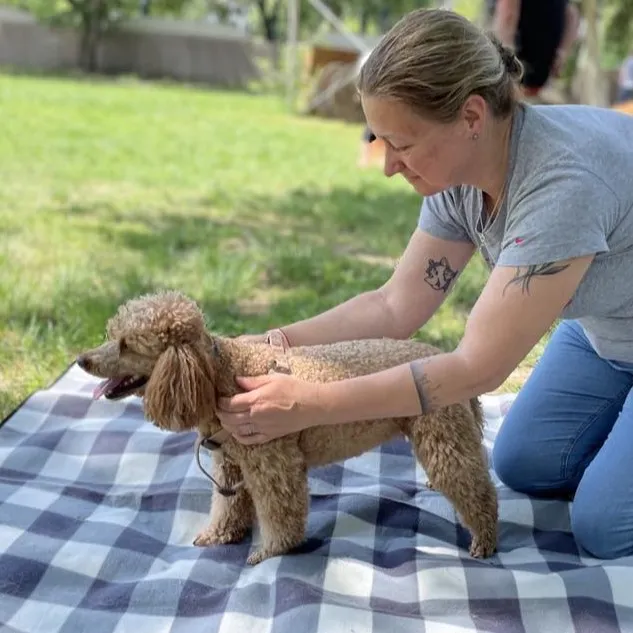
The problem is rarely where the symptom shows.
What compensation costs
Take a typical progression. The dog’s left stifle hurts. It shifts weight onto the right hind leg and the forequarters. Within a few months:
- the left thigh musculature wastes, because it is doing less work;
- the joints of the right hind limb are permanently overloaded, and wear begins there too;
- the lumbar and longissimus muscles tighten, because that is where the substitute stabilisation comes from;
- the forelimbs — already carrying sixty per cent of the body weight — take on still more, which leads to shoulder tension;
- and the shortened stride sets the neck musculature as well.
By this point the dog is not living with a sore stifle; it is living with a wholly rearranged pattern of movement. That is why so many owners say the problem appeared “suddenly”: in fact it had been building for months, and only became visible when the compensation ran out of reserve.
Time is not neutral
Two things make the timing matter.
The first is muscle. Wasted muscle can be rebuilt, but slowly — and the longer the process has run, the slower it goes. After a few weeks of sparing, the difference can be made up in a few weeks. After eighteen months of lameness, we are talking about months.
The second is cartilage. Articular cartilage has limited capacity to regenerate. What has worn away does not grow back, and from that point the goal is only to slow further wear and manage pain. That is precisely why the most is to be gained while a complaint has not yet reached that stage.
What treatment aims at
Not merely at easing the pain that is already there. The real goal is to break the compensatory loop: release the overworked muscle groups, activate and rebuild the wasted ones, restore range of motion to the joints, and re-establish symmetrical loading — before it creates the next problem.
This is why I always look at the whole animal, not just the leg the owner points to. The symptom and the cause are frequently not in the same place.
When to seek help
There is no need to wait for visible lameness. If your dog is slower to stand, skips a jump that used to be routine, walks shorter distances, has changed its sleeping position, or pulls away when stroked in one area — that is reason enough for an examination.
The first step is always the vet: the diagnosis is what tells us what we are dealing with. Manual therapy follows from it, and works to it.