
When does a pet count as senior?
It differs by breed and body mass — and calls for different care.
There is no single age at which a dog becomes old. Contrary to the folk rule, it is not a matter of multiplying by seven — it is primarily a matter of body mass. The bigger the dog, the earlier it enters the senior phase.
Roughly when
- Giant breeds (St Bernard, Great Dane, Irish wolfhound): from 5–6 years
- Large breeds (German shepherd, labrador, golden retriever): from 6–7 years
- Medium breeds (border collie, beagle, vizsla): from 7–8 years
- Small breeds (Yorkshire terrier, dachshund, poodle): from 9–10 years
Exotic small pets run to a different clock: rabbits typically show their first joint signs around 5–7 years, while in rats we are already looking at age-related change at eighteen months to two years.
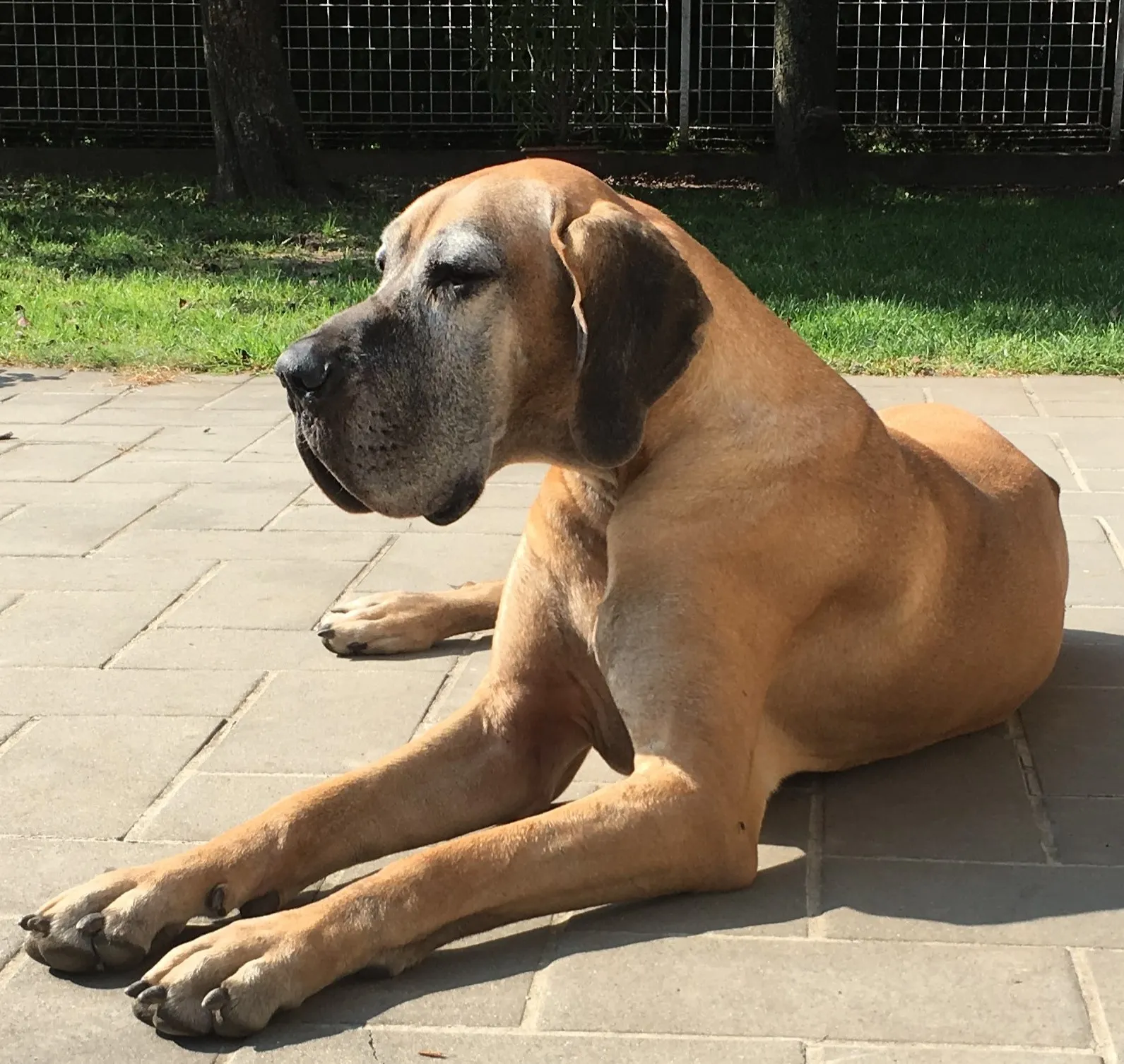
Old age is not an illness — but it asks for different attention.
Signs more precise than the calendar
In practice the date of birth matters less than the movement. These are worth watching for:
- Harder to stand up. Especially after sleep or in cold weather, and especially from a smooth floor.
- The skipped jump. The dog no longer jumps onto the sofa or into the car, though it managed easily before. This is not laziness.
- Shorter walks. Slower over the same route, or visibly tiring towards the end.
- A changed sleeping position. New postures, or more frequent shifting — both can signal discomfort.
- Stairs. Going down often becomes difficult before going up does.
- Changed behaviour. Pulling away from a stroke, or reacting more irritably than before, often comes from pain rather than “old age”.
What to change
Start with the environment, because it costs the least. Runners across slippery floors, a ramp to the car or the sofa, and a properly thick, supportive bed improve quality of life more than any treatment will.
Change the distribution of exercise rather than the amount. An ageing joint benefits far more from several short walks at a steady pace than from one long, exhausting one. The weekend all-out hike is the single most common reason I get a Monday phone call about a stiff, sore dog.
And weight matters. Every excess kilo lands directly on the joints, and it is probably the most easily influenced factor in age-related arthrosis.
Where manual therapy fits
Old age is not an illness, and there is no need to wait for a complaint to develop. Regular preventive treatment aims to preserve the range of motion that is there, keep muscle from wasting, and stop compensatory tension from accumulating.
If symptoms have already appeared, though, the first step is always the vet. Stiffness, lameness or a loss of enthusiasm for movement may be arthrosis — but it may equally be joint inflammation, hypothyroidism or a neurological problem, and those call for an entirely different direction.