
Why nail trimming matters
Overgrown claws change posture and needlessly load the joints.
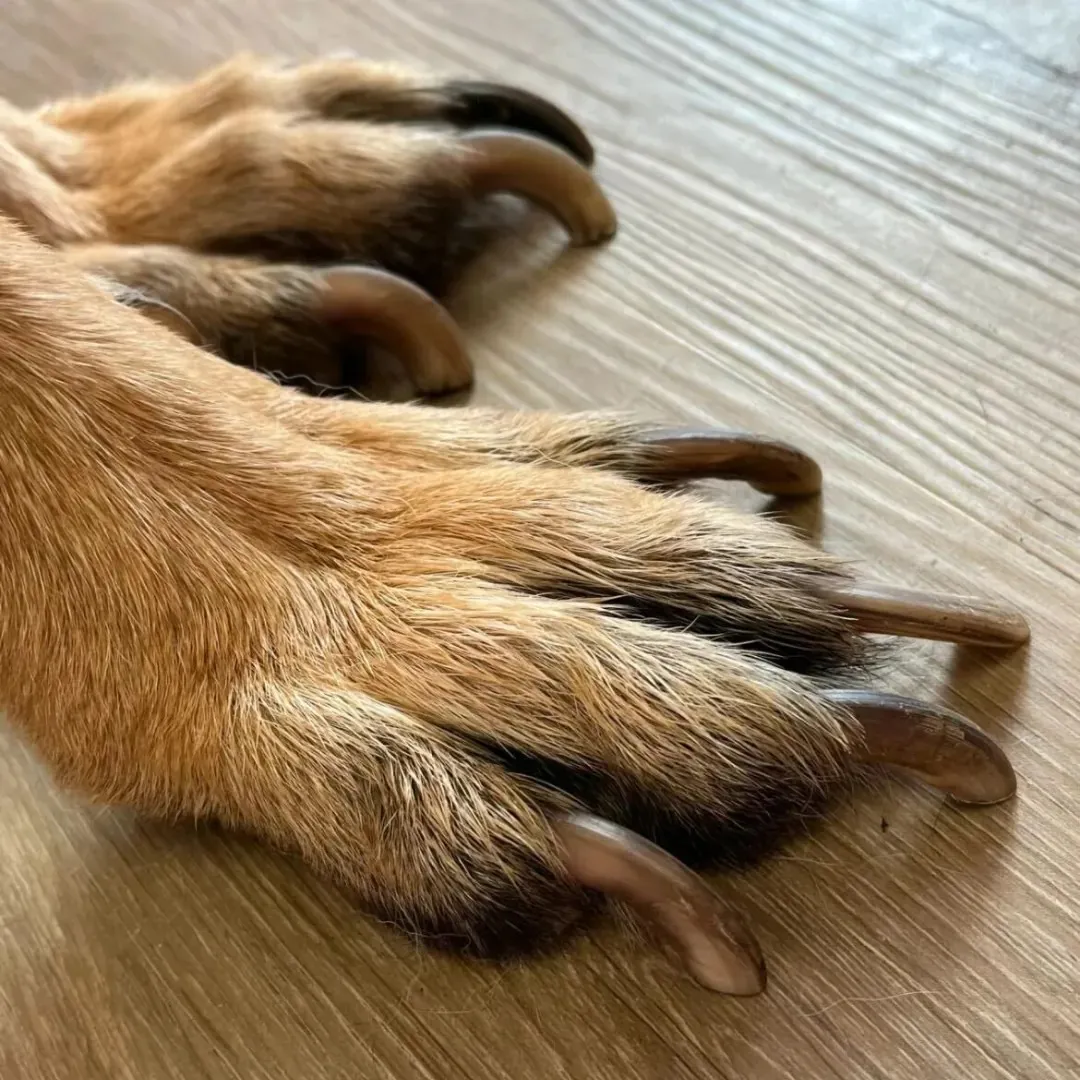
Claw length is not a cosmetic question. If a dog’s claws reach the floor while it is simply standing, the loading point of the paw shifts with every step — and those few millimetres travel the whole movement chain: the toes, the wrist, the elbow, and on into the shoulder girdle.
The most common giveaway is sound. If your dog clicks across laminate or tile, the claws are already too long. Slipping usually follows: long claws lift the pads slightly, so the animal gets less purchase on smooth surfaces. In an older dog that alone is enough to make the gait uncertain, and to shorten and slow the stride.
What it costs over time
- Altered posture. The dog shifts its weight back to spare its toes, holding the back and neck musculature under constant tension.
- Uneven joint loading. The paw meets the ground rotated, so the wrist and elbow no longer work along their own axis. Over years, this accelerates cartilage wear.
- Injury risk. An overgrown claw snags more easily and tears or breaks at the base — painful, and often followed by inflammation.
- Ingrown claws. The dewclaw never touches the ground, so it never wears down. Left alone it curls round and grows into the pad.
In practice
Trim little and often. The claw carries a blood vessel and nerve inside it — the quick — and as the claw grows long, the quick grows with it. After a long gap you cannot restore the right length in one go: the quick only recedes gradually, in response to repeated small trims. That means working weekly, a little at a time.
On dark claws the quick is not visible from outside. Take small cuts and watch the cut surface: when a lighter, moister core appears in the centre, you have reached the limit. A grinder is safer here, because it removes material more gradually.
If a dog has had a bad experience — cut into the quick, or held down by force — trimming becomes a stressor in its own right. This is not about patience. Go back to basics and spend a few weeks simply handling the paw with a reward, and no trimming at all.
Why this comes up in a therapy session
Because claw condition is among the first things I check at the assessment. There is little point releasing tension in the back and shoulder if the dog then returns to the same faulty loading pattern, because its claws will not let the paw land any other way. Massage in that situation treats the symptom — while the cause can be removed at home, in a few minutes.
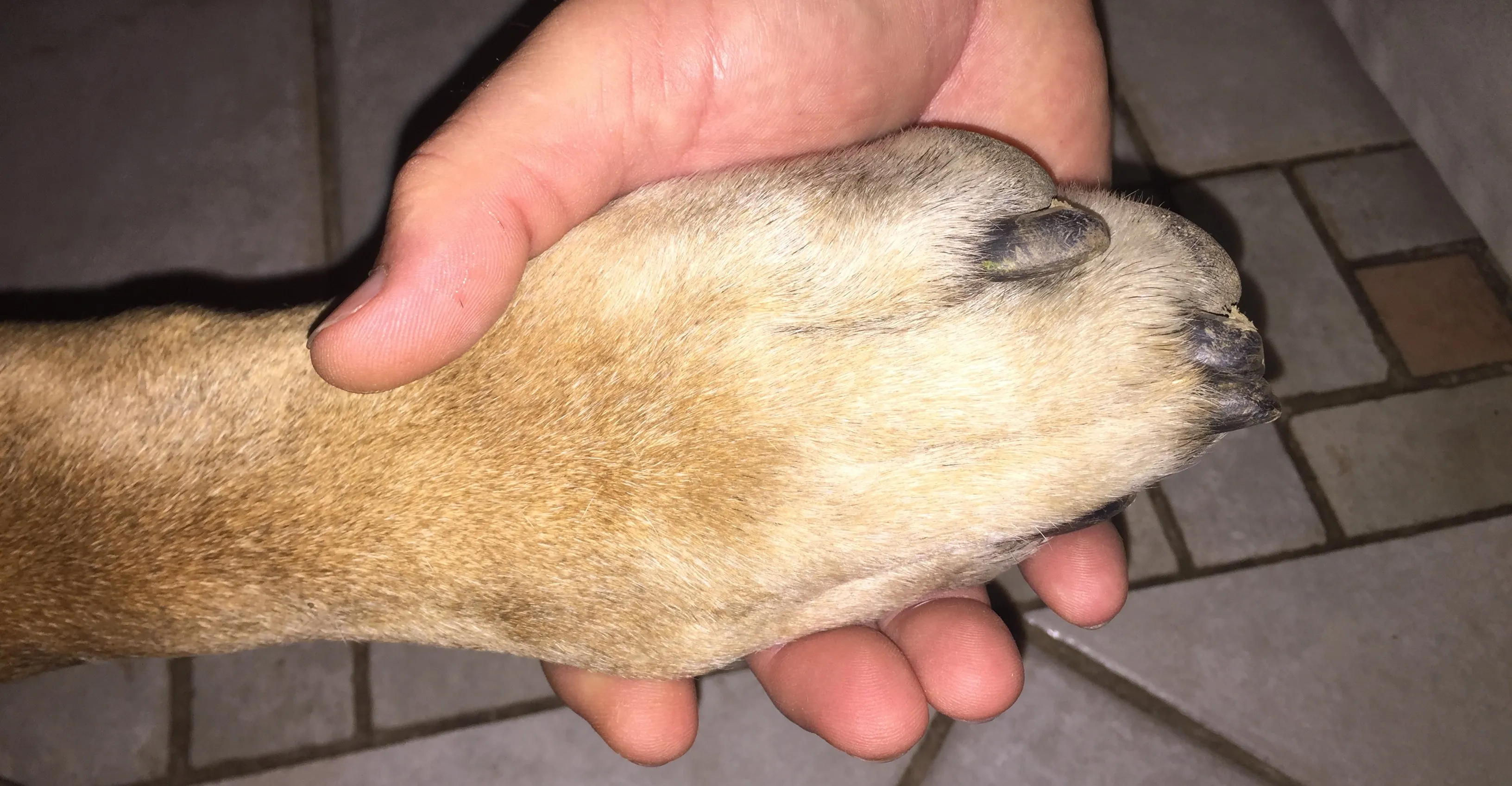
Claws are the right length when they do not touch the floor as the dog stands.