
Manual therapy for exotic small pets
Manual therapy can be applied successfully not only to dogs and cats, but to rabbits and other exotic small pets.
As they age or after injury, exotic small mammals often develop musculoskeletal changes — arthrosis, spondylosis, muscle tension or a reduced range of joint motion.
As prey animals they mask pain for a long time, so problems are often recognised only at an advanced stage. Following a proper assessment, manual therapy can improve joint mobility, release muscle tension, reduce pain and support movement quality.
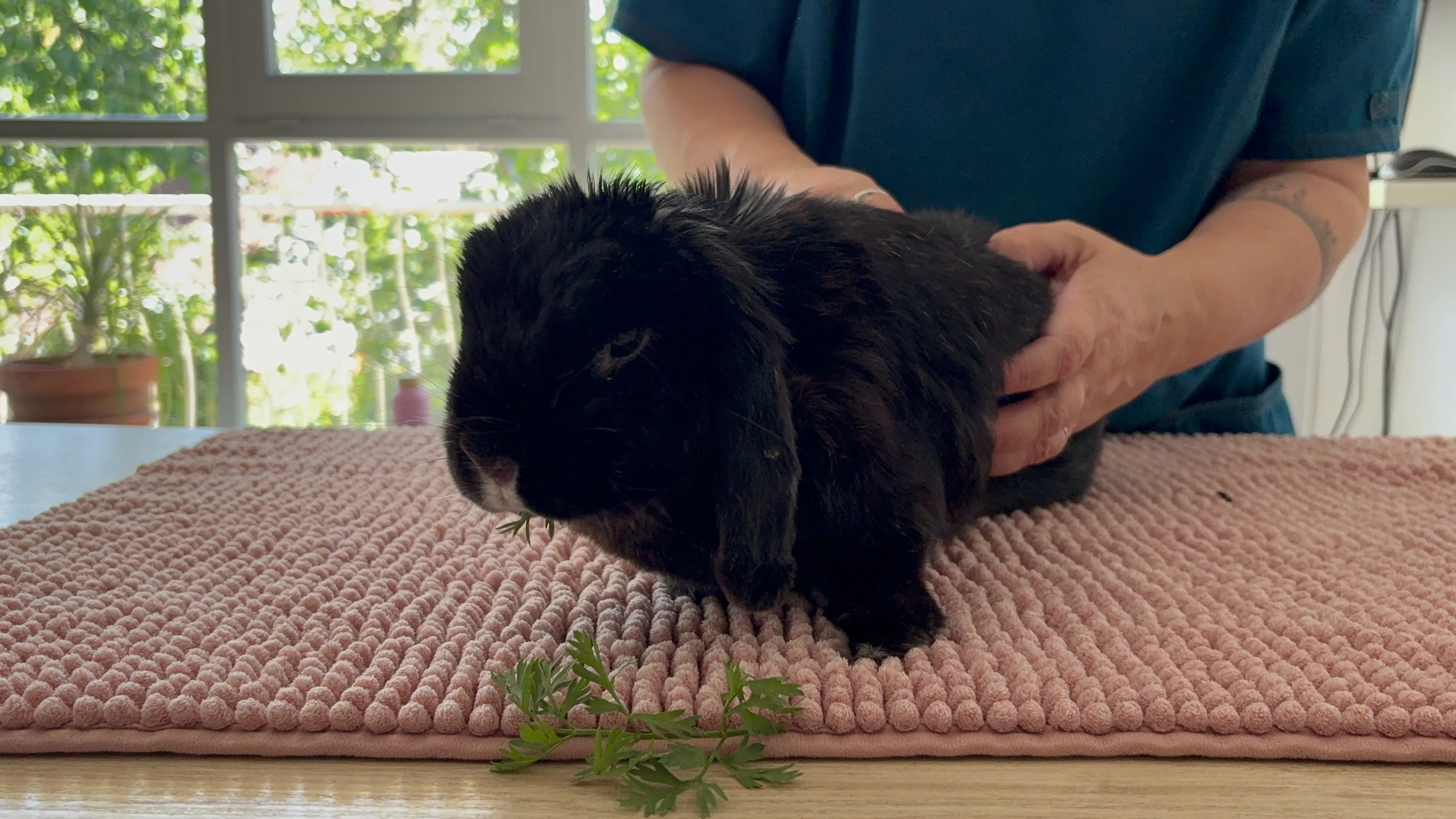
Mid-treatment — the technique always follows the animal’s anatomy.
Every treatment is matched to the animal’s anatomy, general condition and tolerance. Commonly treated conditions:
- Osteoarthritis. Ageing rabbits — often from around seven years — suffer joint stiffness that physiotherapy and analgesia can ease.
- Neurological problems. With limb paralysis or torticollis, balance therapy often helps the animal re-orient itself.
- After surgery. Gentle movement helps prevent muscle atrophy and scar tissue after surgery or fracture.
My greatest joy is that these sensitive little patients usually take the gentle treatment remarkably well — and after only a few sessions there is often a visible change in their movement and mood.
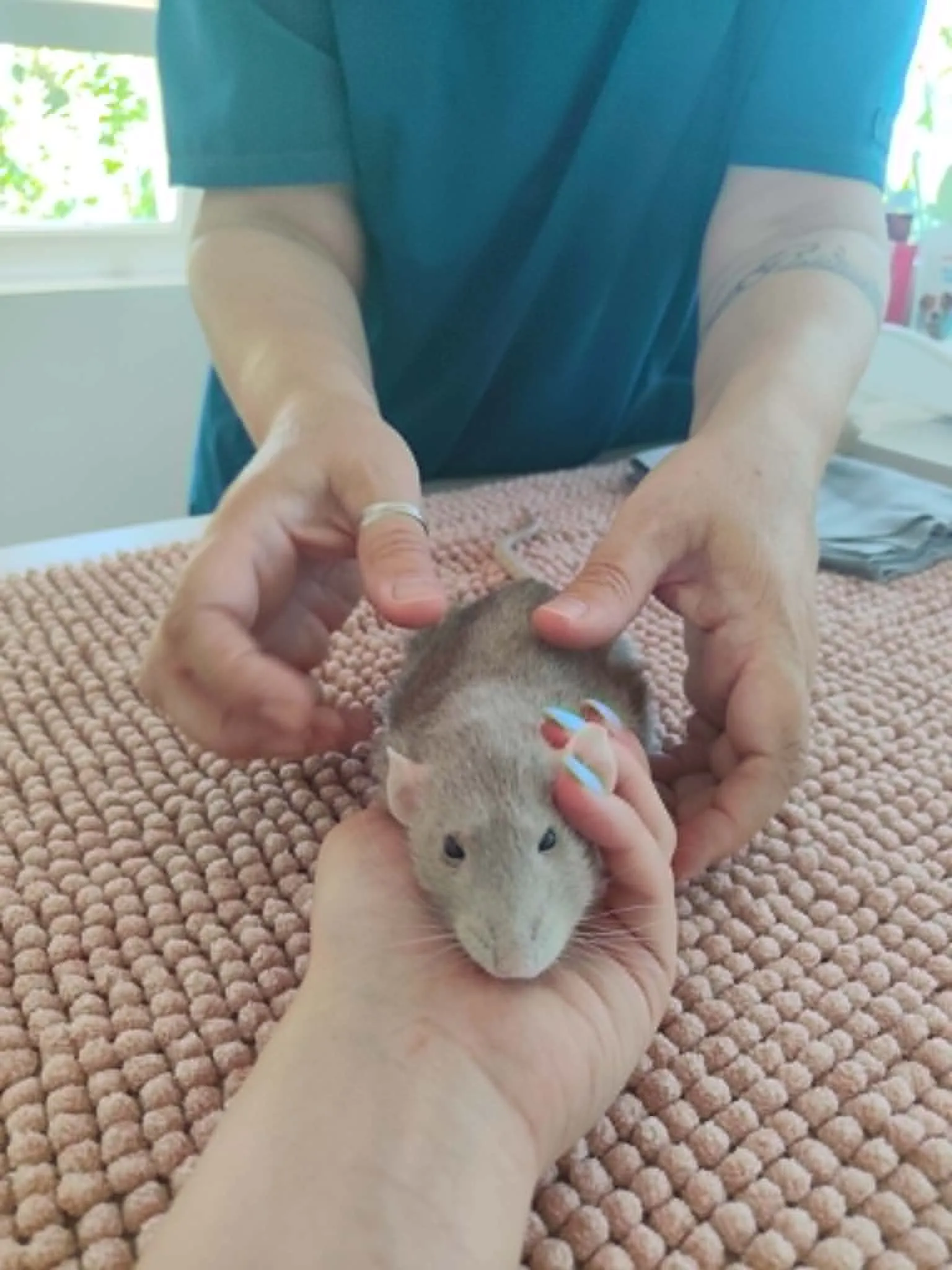
Duduka during a manual therapy session.